Introducing the rest area "Banshu-Ako Station | Breathing Well | Rest Spot" at 6 min walk from banshu-ako Station.
ペン太
A bench introduction based on a member's field survey. Let's take a look right away!
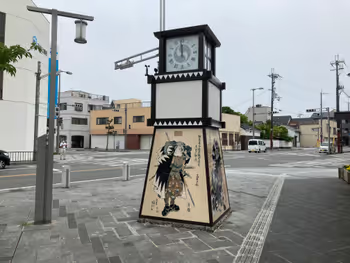
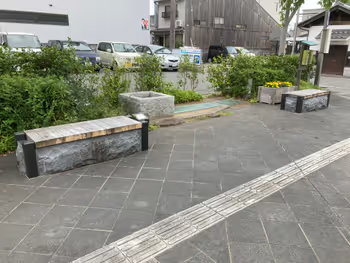
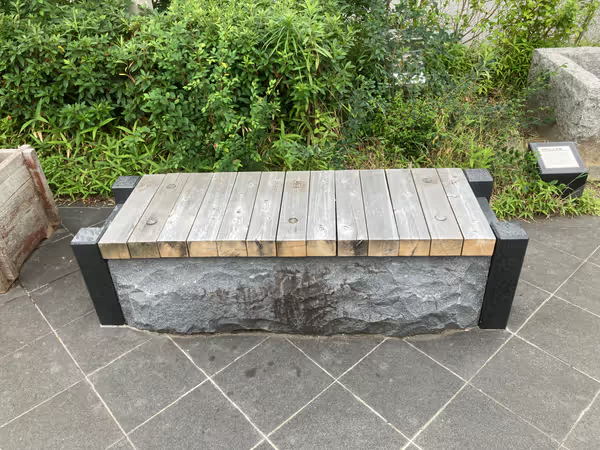
It's located in a park about a 5-minute walk from the south exit of Banshu-Ako Station. There's also a clock tower with moving figures!
The Iki-tsugi Well (Breathing Well) is where, in the Edo period, Lord Asano Takumi-no-kami, the feudal lord of Ako, committed seppuku (ritual suicide) after a sword attack in the Matsu no Ōrōka corridor of Edo Castle. It is said that two retainers who were in Edo that evening took a "haya-kago" (a fast palanquin) and traveled to Ako, taking four and a half days. They quenched their thirst at this well before entering Ako Castle.
The distance between Tokyo and Ako is 620km. It seems that even the fastest messengers of the time took about eight days to cover that distance.
The palanquins we see in historical dramas might seem like elegant carriages for the lords, but they were incredibly shaky! The "haya-kago," in particular, was carried at a run, so the jostling must have been intense. It was quite a strain on the internal organs, so it was difficult to ride unless you were healthy and strong.
Nowadays, it takes about four hours by Shinkansen (bullet train) and local trains. And, you can contact anyone immediately with your smartphone! It's amazing how things have changed, isn't it?
Suwari Review
Introducing the rest area "Banshu-Ako Station | Breathing Well | Rest Spot" at 6 min walk from banshu-ako Station.
ペン太
A bench introduction based on a member's field survey. Let's take a look right away!
It's located in a park about a 5-minute walk from the south exit of Banshu-Ako Station. There's also a clock tower with moving figures!
The Iki-tsugi Well (Breathing Well) is where, in the Edo period, Lord Asano Takumi-no-kami, the feudal lord of Ako, committed seppuku (ritual suicide) after a sword attack in the Matsu no Ōrōka corridor of Edo Castle. It is said that two retainers who were in Edo that evening took a "haya-kago" (a fast palanquin) and traveled to Ako, taking four and a half days. They quenched their thirst at this well before entering Ako Castle.
The distance between Tokyo and Ako is 620km. It seems that even the fastest messengers of the time took about eight days to cover that distance.
The palanquins we see in historical dramas might seem like elegant carriages for the lords, but they were incredibly shaky! The "haya-kago," in particular, was carried at a run, so the jostling must have been intense. It was quite a strain on the internal organs, so it was difficult to ride unless you were healthy and strong.
Nowadays, it takes about four hours by Shinkansen (bullet train) and local trains. And, you can contact anyone immediately with your smartphone! It's amazing how things have changed, isn't it?